News
High-Density vs. Puff Printing: Which Effect Fits Your Design?
Three-dimensional printing effects are widely used in apparel because they add depth, texture and visual impact that ordinary flat printing cannot achieve.
Two common solutions are high-density printing and puff printing, but they create very different results.
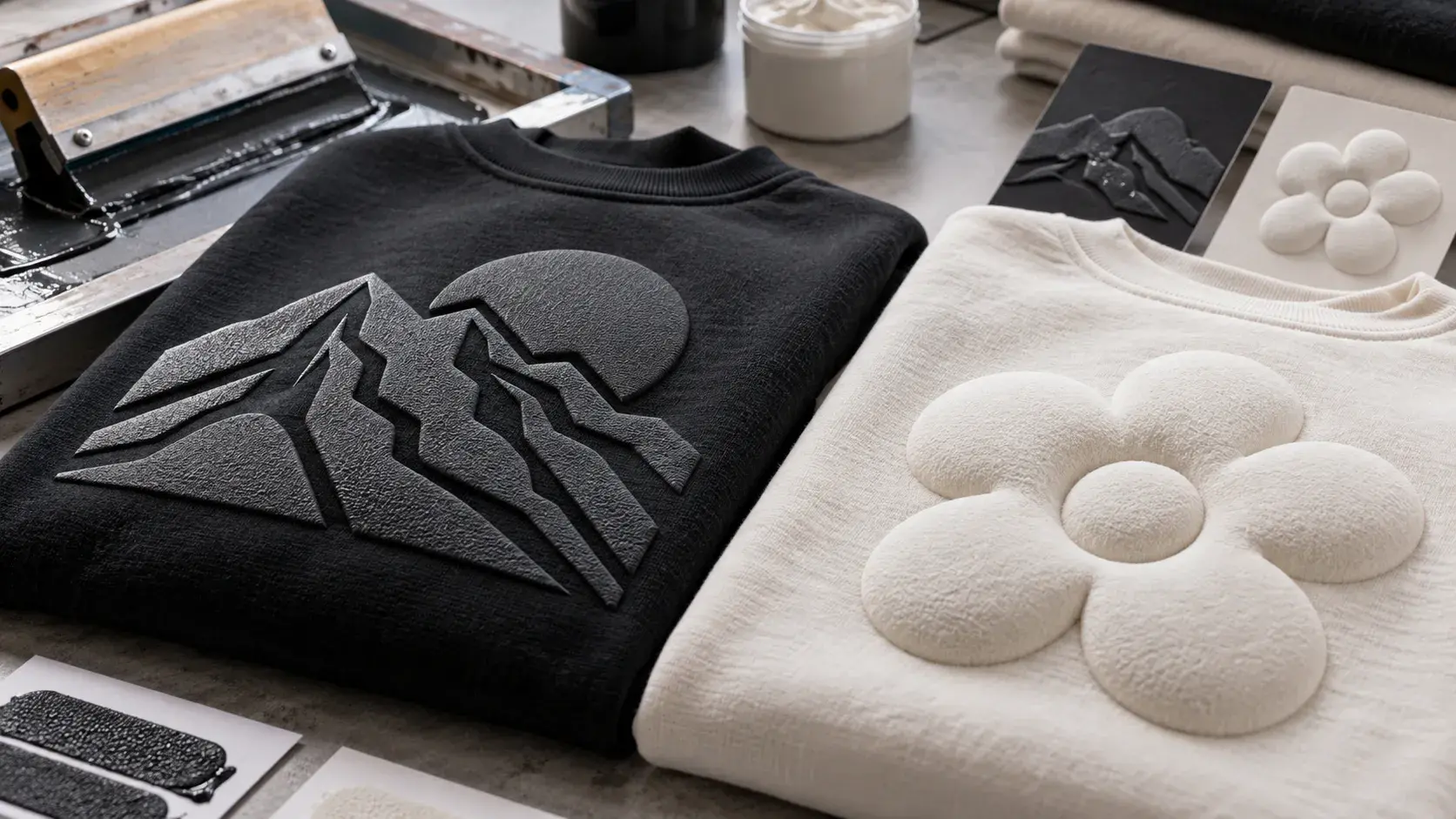
High-density paste builds clean and clearly defined raised layers on the fabric surface, while puff paste expands during heating to create a softer, rounder and fuller effect.
Choosing between them depends on the fabric, graphic detail, desired hand feel and production conditions.
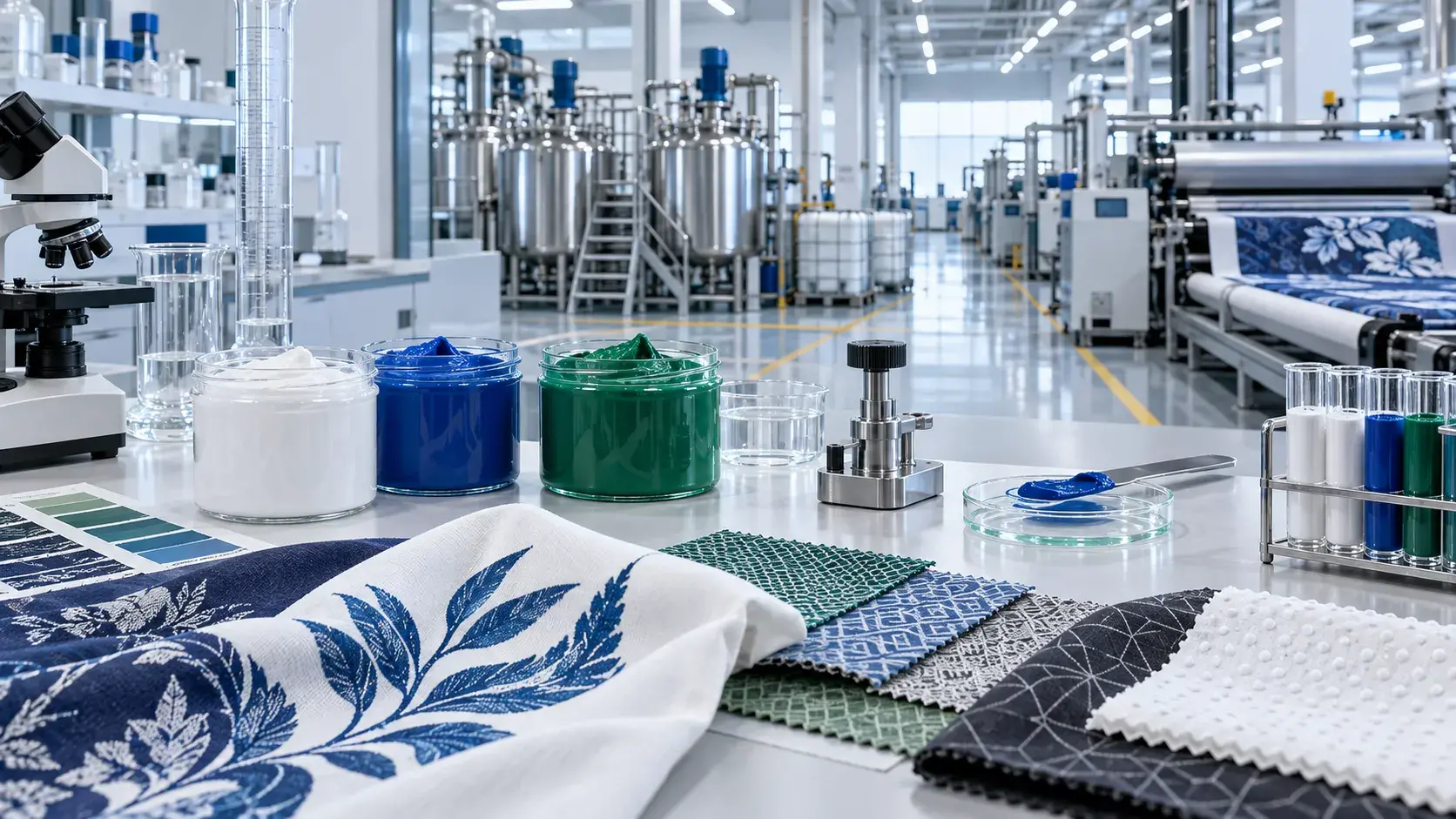
Zhuancai’s product portfolio includes both the Machine HD Paste Series and Puff Paste Series for different dimensional textile printing requirements.
What Is High-Density Printing?
High-density printing uses specially formulated paste to create a raised layer on the surface of the fabric.
Compared with conventional flat printing, it emphasizes defined edges, controlled thickness and a structured three-dimensional appearance.
This makes it suitable for lettering, logos, geometric graphics and decorative apparel designs where dimensional definition is important.
A good high-density print should not only provide visible thickness but also maintain clean edges, appropriate hand feel, adhesion and wash performance.
Zhuancai’s Machine HD Paste Series includes formulations developed for different dimensional effects and textile printing requirements.
How Is Puff Printing Different?
Puff printing works in a different way.
The printed layer contains components that expand when exposed to heat during the curing process. As the print expands, the surface becomes thicker, softer and more rounded.
This makes puff printing particularly suitable for designs where the objective is a soft, inflated or foam-like effect.
Puff printing is commonly used on sweatshirts, T-shirts, casualwear and decorative garment graphics.
Because the expansion process depends heavily on temperature and curing conditions, choosing the correct puff paste is important. Zhuancai’s Puff Paste Series includes different formulations for different processing conditions, helping printers adapt the material to their production setup.
Which One Should You Choose?
The answer depends on the final effect.
Choose high-density paste when the design requires sharp edges, controlled thickness and a more structured three-dimensional appearance.
Choose puff paste when the design requires a softer, fuller and more expanded surface.
Fabric type also matters. Stretch, surface texture and heat resistance can all influence the final printing result.
For this reason, testing the material on the actual fabric before mass production remains an important part of the printing process.