News
Water-Based PU Printing for Swimwear and Stretch Fabrics
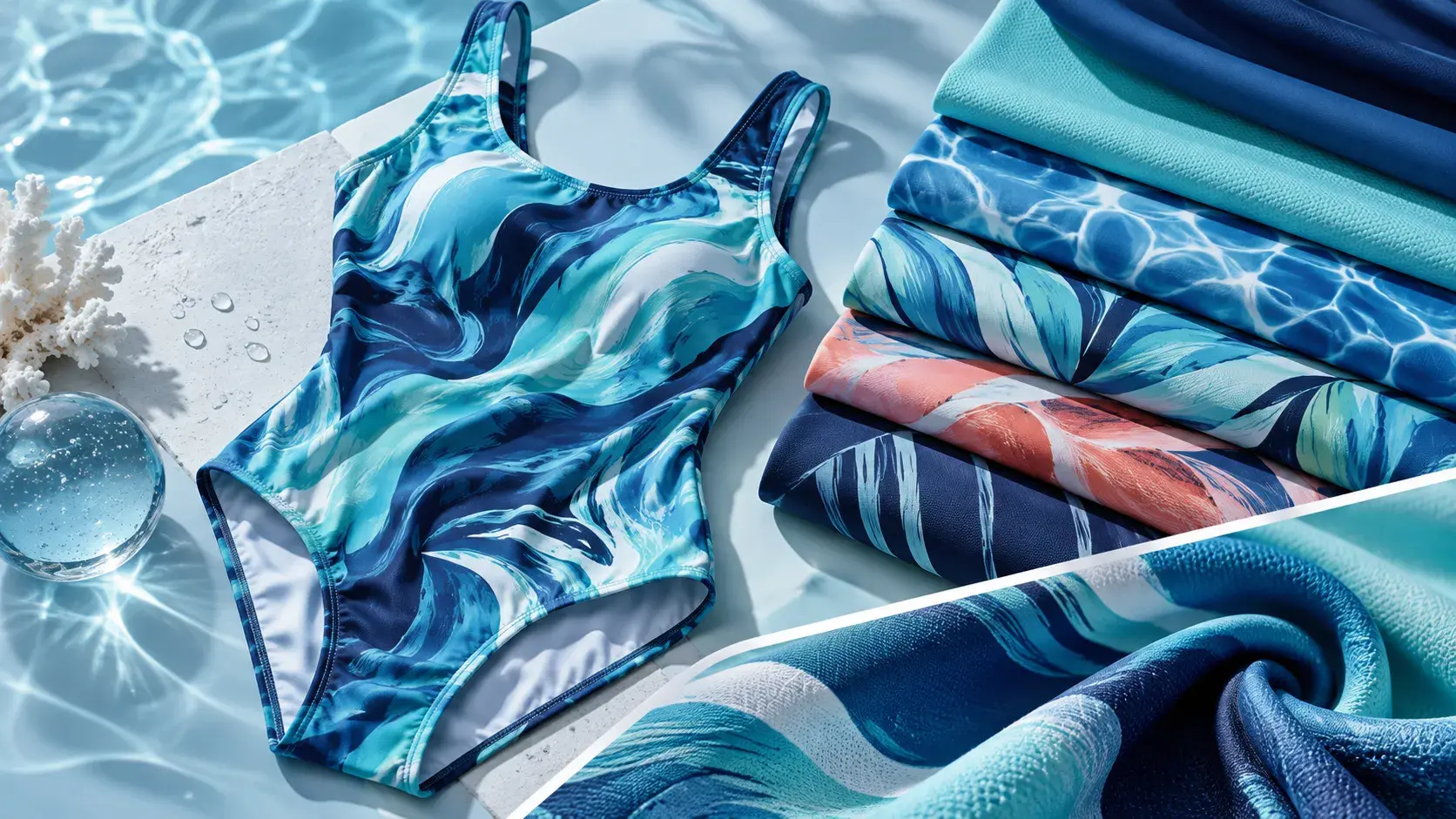
Printing on swimwear, Lycra and other highly elastic fabrics is very different from printing on ordinary cotton.
These fabrics repeatedly stretch and recover during use. If the printed layer cannot move together with the substrate, cracking, stiffness or poor adhesion may occur.
For this reason, stretch-fabric printing materials need to balance elasticity, softness, adhesion and durability.
Zhuancai’s PU Lycra Paste Series is developed for swimwear and highly elastic textile applications, with different PU paste options for different requirements
Why Are Stretch Fabrics More Difficult to Print?
A conventional printing paste may perform well on a stable fabric but behave very differently on highly elastic materials.
When the fabric stretches, the printed layer must stretch with it.
If the print is too rigid, cracking may occur. If adhesion is insufficient, the printed layer may separate from the fabric after repeated stretching. An overly heavy print can also affect the natural softness of swimwear and sportswear.
Therefore, stretch printing should not be evaluated only by color and appearance. The mechanical behavior of the printed layer is equally important.
Elasticity and Recovery Matter
One of the most important properties of a PU printing system is its ability to move with the fabric.
After stretching, the printed layer should recover together with the textile instead of remaining permanently deformed.
This is particularly important for swimwear, sportswear, leggings, stretch tops and other close-fitting elastic garments.
Zhuancai’s PU Lycra Paste Series is developed around softness, elasticity and practical textile performance.
Hand Feel Is Equally Important
Performance is not the only consideration.
Swimwear and activewear also need to remain soft and comfortable.
If the printed layer is too thick or rigid, it may reduce the flexibility of the fabric and affect wearing comfort.
Material selection should therefore consider both technical performance and the desired hand feel.
Test on the Actual Fabric Before Production
Even fabrics that look similar may behave differently during printing.
Fiber composition, surface treatment, color, elasticity and finishing processes can all affect adhesion and final print performance.
Before mass production, the selected material should therefore be tested on the actual fabric for print appearance, stretching behavior, recovery, adhesion and wash performance.